APOLLO — the software that flew to the Moon
In memory of Margaret Hamilton
This part of the project was created in memory of a recently deceased woman who changed computer science forever.
Margaret Hamilton (1936–2026) led the team that wrote the on-board software of the Apollo Guidance Computer (AGC) — the computer that guided the Apollo 11 mission. She coined the term "software engineering". At a time when programming was seen as support work, she insisted that building flight software is engineering — as responsible as designing a bridge.
She was also the woman who saved the mission. Three minutes before touchdown the guidance computer raised alarms 1201 and 1202 — processor time overflow. Buzz Aldrin requested altitude readouts for the eighth time, yet the system was designed for seven simultaneous programs. Most systems would have failed. Hamilton's software had a designed priority hierarchy: it dropped non-essential tasks and kept the critical ones — guidance and control. The landing succeeded.
Earlier she had written a program she believed would never run. She called it "Forget It". When the unlikely scenario actually happened, control was handed over to exactly that program. In 2016 she received the Presidential Medal of Freedom — the highest civilian honour in the United States.
Her work made it possible for the entire mission — there and back — to be completed. Without that code, no one would have stood on the Moon in 1969.
"Software was treated like something you just do. Only over time did
people begin to understand it is engineering — with design, testing,
documentation and responsibility."
— Margaret Hamilton
The APOLLO programs in CYBER27 — mission simulator, flight physics, Solar System quizzes — are a tribute to her work. We learn the same laws of physics she wrestled with: speed, fuel, gravity and time. And — like her — we learn that well-written software saves everything.
Rest in peace, Margaret.
Your work lives in every computer that flies today.
The APOLLO programs in CYBER27
Apollo 11 mission simulator
You are the pilot. Goal: reach the Moon (384 000 km) and return safely. The cockpit shows altitude, speed, fuel, oxygen, power. Random failures.
Flight physics
The physics of flight: v=s/t, fuel consumption, acceleration, gravity on Earth and Moon, escape velocity.
Solar system
8 planets with data: distance from the Sun, day, year, conditions, moons.
Mission logic
Decisions at critical moments — thinking like a NASA engineer.
Navigation
Course calculation, distances and trajectory corrections.
Fuel
Fuel balance: consumption × time, reserve, decision to turn back.
Cosmos
Spaceflight basics: orbits, speeds, gravity.
Screenshots
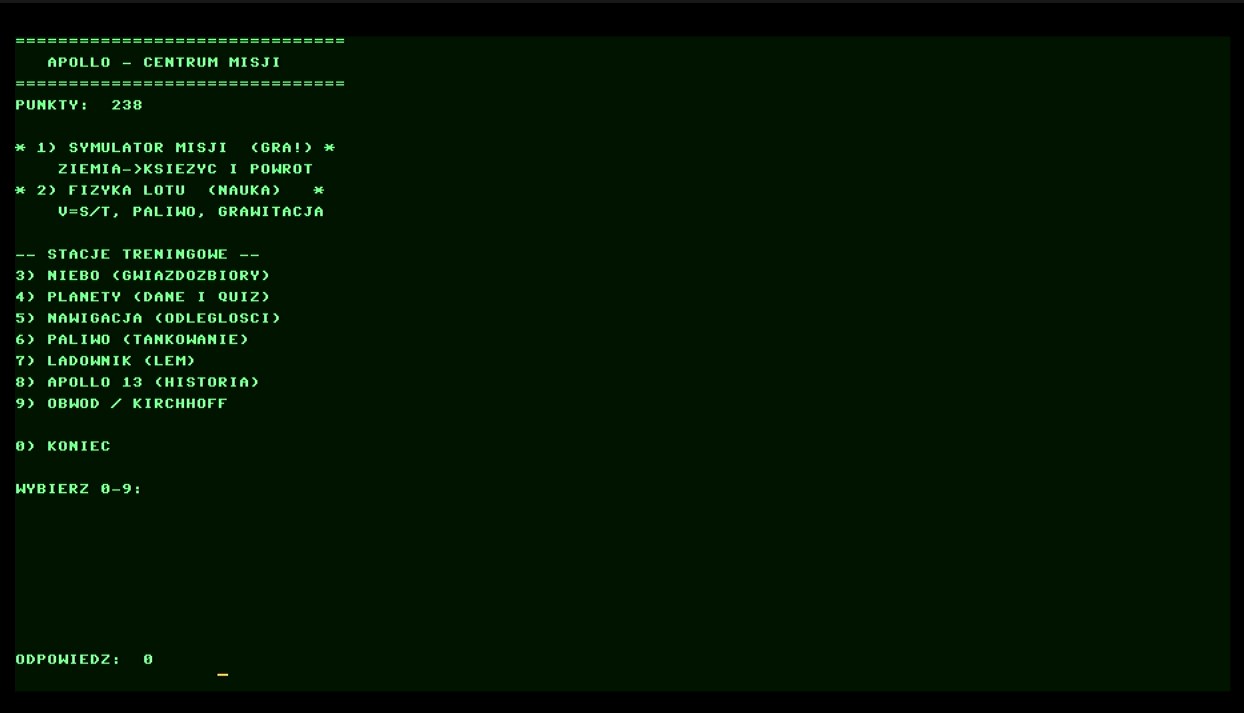
APOLLO — Centrum Misji | Centrum Misji | Mission Centre | Центр миссии
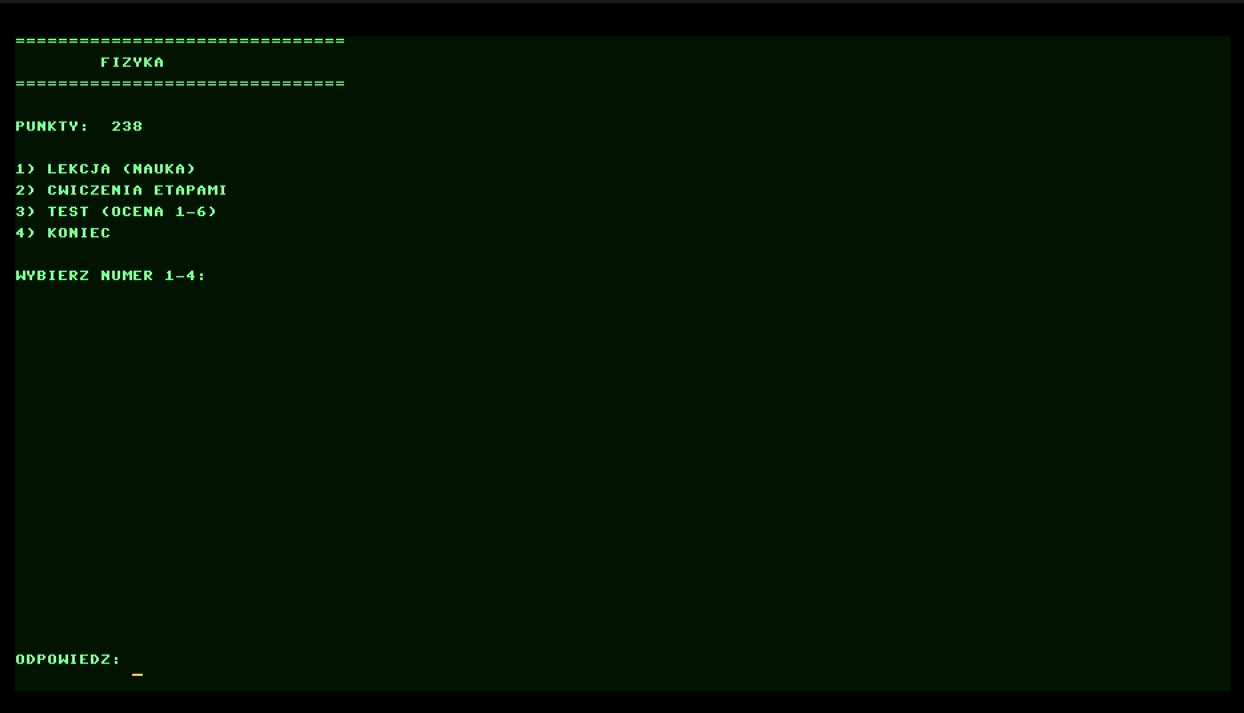
Fizyka | Fizyka | Physics | Физика
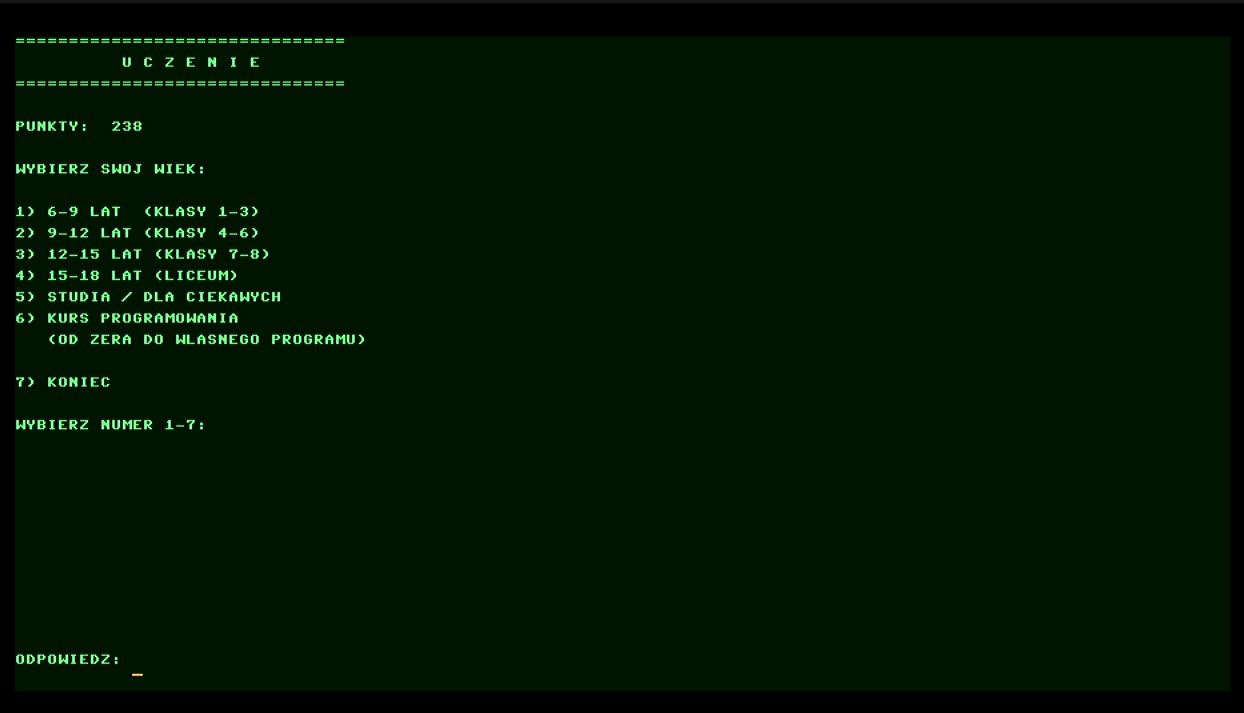
Uczenie — wybór wieku | Uczenie | Learning | Обучение
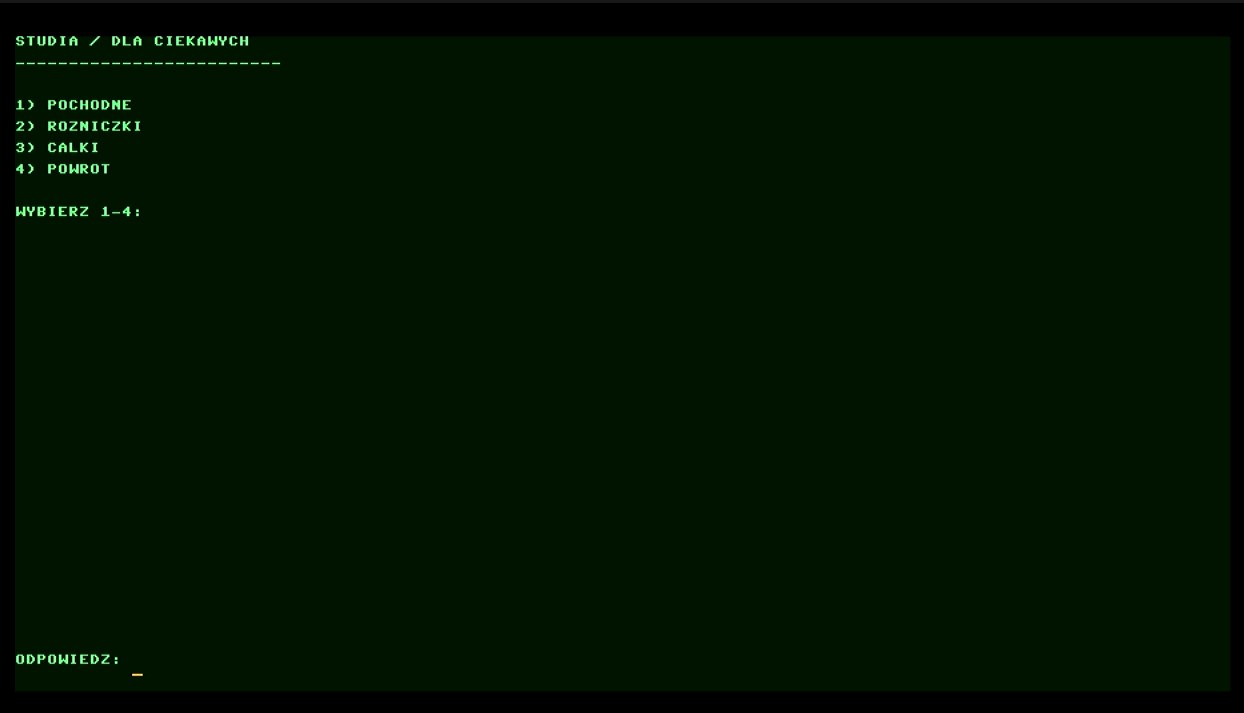
Studia — pochodne, całki | Studia | Advanced | Углублённо
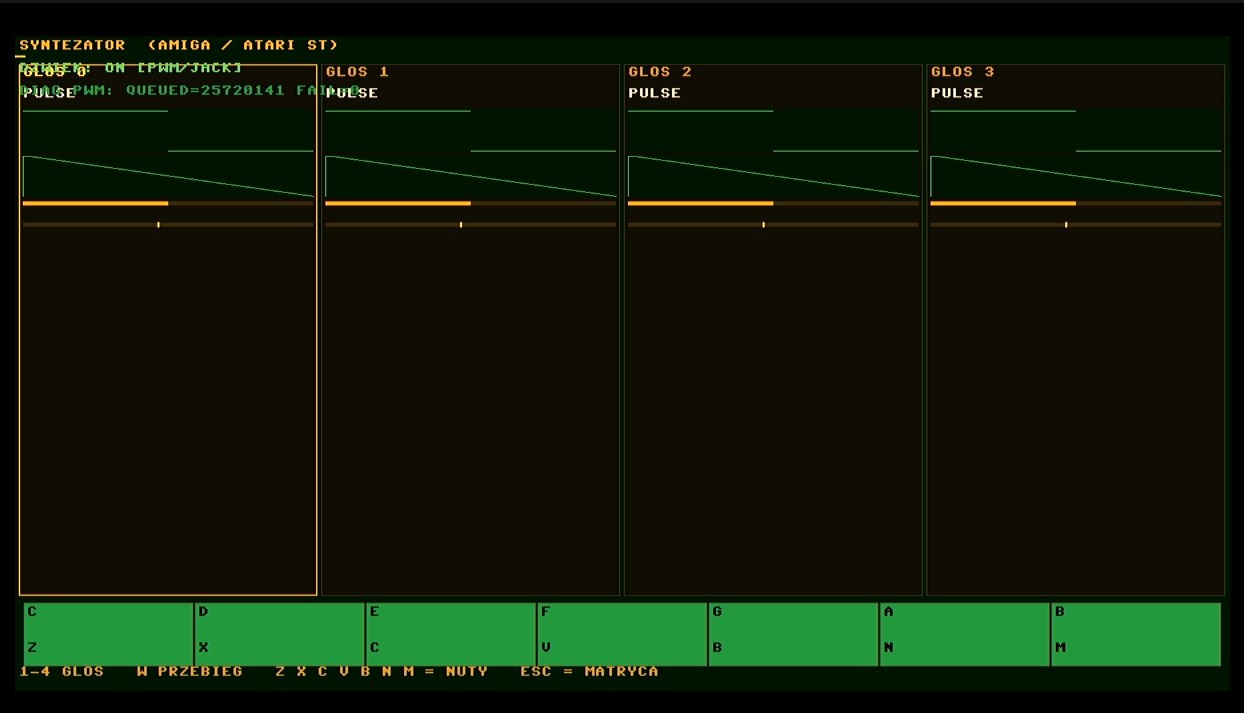
Syntezator 4 głosy | Syntezator | Synthesizer | Синтезатор
Why this project?
Why an Apollo program in a system for children? Because we learn through real stories. Every equation v = s / t is not a dry exercise — it is a calculation that once decided the lives of three people 384 000 km from home.
CYBER27 is also a story about how good software saves lives. Margaret Hamilton wrote code that anticipated a fault nobody expected. We teach the same: program with imagination, think about what can go wrong, and write it so that it survives.